Simple Assault vs. Aggravated Assault – What Are the Key Differences?
May 20, 2026
Understanding the difference between simple assault and aggravated assault is critical if you are facing criminal charges in Florida. While both offenses involve threats or acts of violence, the severity, penalties, and long-term consequences can vary significantly.

Even though no physical contact is required for an assault charge, the classification of the offense can dramatically impact your future.
At Donet, McMillan & Trontz, P.A., we help clients understand their charges and build strong defense strategies tailored to their specific case.
What Is Simple Assault in Florida?
Under Florida law, simple assault occurs when a person:
- Intentionally and unlawfully threatens another person
- Has the apparent ability to carry out the threat
- Creates a well-founded fear that violence is imminent
Importantly, no physical contact is required. The mere threat of harm, if credible, can be enough.
Penalties for Simple Assault
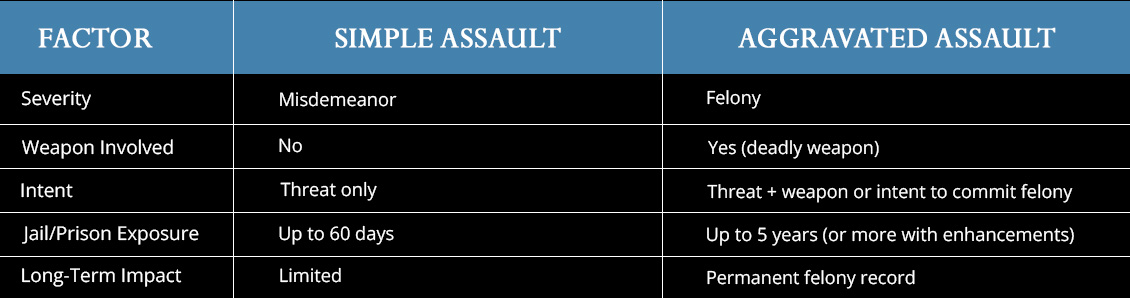
Simple assault is typically charged as a second-degree misdemeanor.
Potential penalties include:
- Up to 60 days in jail
- Up to 6 months of probation
- Fines up to $500
- Possible anger management or intervention programs
What Is Aggravated Assault in Florida?
Aggravated assault is a more serious offense. It involves all the elements of simple assault plus additional aggravating factors.
Under Florida law, aggravated assault occurs when a person commits an assault:
- With a deadly weapon (without intent to kill), or
- With an intent to commit a felony
Examples of Aggravated Assault
- Threatening someone with a firearm or knife
- Using an object capable of causing serious harm
- Making threats while attempting to commit another crime
Penalties for Aggravated Assault
Aggravated assault is typically charged as a third-degree felony.
Potential penalties include:
- Up to 5 years in prison
- Up to 5 years of probation
- Fines up to $5,000
- Permanent felony record
If a firearm is involved, enhanced penalties may apply under Florida's sentencing laws.
Does Assault Require Physical Contact?
No. One of the most common misconceptions is that assault requires physical contact.
In Florida:
- Assault = Threat of harm
- Battery = Physical contact or harm
This distinction is important because many cases are charged based solely on perceived threats.
Possible Defenses to Assault Charges
Both simple and aggravated assault charges may be defended based on the facts of the case.
Common defenses include:
- Self-defense
- Lack of intent
- No credible threat
- False accusations
- Misidentification
- Insufficient evidence
Each case requires a detailed analysis of the circumstances and available evidence.
Why the Charge Matters
The difference between simple and aggravated assault can affect:
- Whether you face jail or prison
- Your criminal record
- Employment opportunities
- Housing and background checks
- Immigration status
A felony conviction carries long-term consequences that can follow you for life.
How Donet, McMillan & Trontz, P.A. Can Help
At Donet, McMillan & Trontz, P.A., we understand how prosecutors build assault cases and how to challenge them effectively.
Our attorneys provide:
- Strategic case evaluation
- Aggressive defense representation
- Protection of your constitutional rights
- Experience in both misdemeanor and felony cases
Early legal representation can be critical in reducing or dismissing charges.

FAQ: Simple vs. Aggravated Assault in Florida
Is aggravated assault always a felony?
Yes. In Florida, aggravated assault is typically charged as a third-degree felony.
Can simple assault become aggravated assault?
Yes. If a weapon is involved or there is intent to commit another felony, the charge can be elevated.
What is considered a deadly weapon?
Any object that can cause serious bodily harm or death, including firearms, knives, or even everyday objects used in a dangerous way.
Can assault charges be dropped?
Only the prosecutor can drop charges, but a strong defense can lead to dismissal or reduction.
Do I need a lawyer for a misdemeanor assault?
Yes. Even misdemeanor charges can have lasting consequences and should be taken seriously.
Final Thoughts
While simple assault and aggravated assault may sound similar, the legal differences are significant. The presence of a weapon or intent to commit another crime can elevate a misdemeanor into a serious felony offense.
If you are facing assault charges in Florida, understanding your rights and working with an experienced criminal defense attorney can make a meaningful difference in your case. Contact Donet, McMillan & Trontz, P.A., and we'll help you secure the most positive outcome.