Consequences of Probation Violation in Florida
October 16, 2026
Being placed on probation gives a person the opportunity to remain in the community while complying with conditions imposed by the court. However, probation is not the same as having your criminal case disappear. It comes with legally enforceable requirements, and failing to follow those requirements can result in serious consequences.
The consequences of probation violation in Florida depend on several factors, including the type of violation, whether it was intentional, the person's criminal history, the original offense, previous violations, and whether the violation involved a new criminal offense.
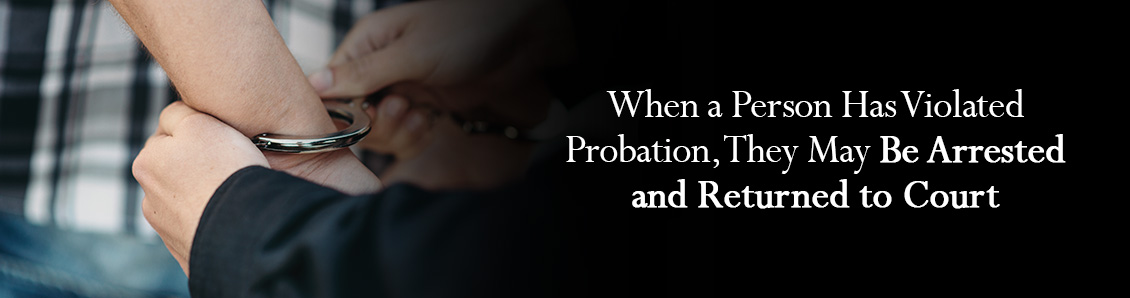
Under Florida Statutes § 948.06, when there are reasonable grounds to believe that a person has violated probation or community control in a material respect, the person may be arrested and returned to court. Depending on the circumstances, the court may continue, modify, or revoke probation.
A probation violation should therefore never be treated as a minor administrative issue.
If you are facing an alleged probation violation in Florida, understanding what happens next—and obtaining legal advice as early as possible—can be critical.
What Is a Probation Violation in Florida?
Probation is court-ordered supervision that requires an individual to comply with specific conditions after being convicted or otherwise sentenced in a criminal case.
The conditions vary depending on the case. They may include:
- Reporting to a probation officer.
- Maintaining employment or providing employment information.
- Completing community service.
- Paying restitution, court costs, or other financial obligations.
- Submitting to drug or alcohol testing.
- Completing counseling or treatment.
- Attending required classes or programs.
- Following curfew requirements.
- Remaining within an approved geographic area.
- Avoiding certain people or locations.
- Refraining from committing new criminal offenses.
- Complying with other conditions specifically ordered by the court.
Florida law requires probationers to perform the terms and conditions of their probation during the supervision period.
A violation can occur when someone fails to comply with one or more of these requirements.
However, not every probation violation automatically means that the person will go to jail or prison. The nature and circumstances of the alleged violation matter.
Types of Probation Violations in Florida
One of the most important distinctions in Florida probation law is between technical violations and violations involving new criminal conduct.
Technical Probation Violations
A technical violation generally involves failing to follow a condition of supervision without committing a new felony, misdemeanor, or criminal traffic offense. Examples can include:
- Missing a probation appointment.
- Failing to report a change of address.
- Failing to report a change in employment.
- Missing a required treatment or counseling session.
- Failing to complete a required condition.
- Testing positive for drugs or alcohol.
- Violating a curfew.
- Leaving the county without permission.
- Failing to make required payments.
- Associating with someone involved in criminal activity.
Florida law provides an alternative sanctioning framework for certain technical violations. For eligible probationers, a first or second low-risk violation may result in sanctions such as limited county jail time, community service, counseling, treatment, drug testing, curfew, house arrest, or loss of certain privileges rather than immediately proceeding through a traditional revocation process.
Eligibility is not automatic.
For example, certain offenders and certain types of violations are excluded from alternative sanctions, including violations involving new criminal offenses, absconding, stay-away or no-contact orders, and other circumstances identified by statute.
New Criminal Offenses While on Probation
A probation violation becomes considerably more serious when the alleged conduct involves a new criminal offense. For example, a person on probation who is arrested for:
- DUI
- child pornography
- drug trafficking
- drug possession
- theft
- assault
- domestic violence
- fraud
- weapons offenses, or
- another criminal offense
You may potentially face both the new criminal case and consequences related to the alleged probation violation.
These are separate legal issues, although the circumstances can overlap.
A new arrest does not necessarily mean that the person will automatically be found guilty of the new offense or that probation will automatically be revoked. The allegations still have to be addressed through the appropriate legal process.
What Happens After an Alleged Probation Violation?
The process can vary depending on the circumstances.
Under Florida Statutes § 948.06, when there are reasonable grounds to believe that probation has been violated in a material respect, a probation officer or law enforcement officer may initiate the process that can result in arrest. A judge may also issue a warrant based on the facts presented. In certain circumstances, a notice to appear may be used instead.
1. A Violation Is Alleged
The probation officer, law enforcement, or another source may report an alleged violation.
The allegation itself is not the same as a final determination that the person violated probation.
2. An Arrest or Notice to Appear May Occur
Depending on the circumstances, the court may issue a warrant, or the individual may be arrested without a warrant under the statute.
In certain cases, a notice to appear may be issued instead of an arrest warrant.
 3. The Probation Period May Be Tolled
Once the statutory violation process is initiated through the filing of an affidavit and the applicable warrant, warrantless arrest, or notice to appear, the probationary period is generally tolled until the court rules on the alleged violation.
This is important because a person should not assume that simply reaching the original end date of probation necessarily ends the court's authority over a properly initiated violation.
4. The Court Addresses the Allegation
The court will advise the person of the alleged violation.
If the violation is admitted, the court can proceed with the available options.
If the violation is not admitted and the matter is not dismissed, Florida law provides an opportunity for the probationer to be heard personally or through counsel.
What Happens at a Probation Violation Hearing?
A probation violation hearing is different from a traditional criminal trial.
The central issue is whether the alleged violation occurred and, depending on the circumstances, what consequences should follow.
Florida appellate decisions explain that revocation generally requires a finding supported by the greater weight of the evidence that the probationer committed a willful and substantial violation.
The circumstances surrounding the alleged violation can therefore be extremely important. For example, there may be a significant difference between:
"I intentionally refused to comply with the court's order."
and:
"I attempted to comply, but an unexpected circumstance prevented me from completing the requirement."
The evidence, documentation, communications with probation, treatment records, employment records, payment history, and other circumstances may all matter.
Can Probation Be Revoked in Florida?
Yes.
If the court finds that a probation violation occurred, the court may have several options. Depending on the circumstances, the court may:
- Continue probation.
- Modify the conditions of probation.
- Add additional conditions.
- Place the person into community control where legally authorized.
- Impose certain alternative sanctions when the person qualifies.
- Revoke probation.
- Impose a sentence that could have originally been imposed for the underlying offense.
Florida Statutes § 948.06 expressly gives the court authority to revoke, modify, or continue probation after the applicable violation process.
This is one of the most important consequences of a probation violation: revocation can reopen the sentencing consequences associated with the original criminal offense.
Can You Go to Jail for Violating Probation in Florida?
Yes.
A probation violation can result in incarceration, depending on the circumstances and the court's decision.
The potential sentence is not necessarily limited to the amount of time remaining on probation.
If probation is revoked, Florida law generally allows the court to impose any sentence it could have imposed when the defendant was originally placed on probation, subject to applicable statutory and constitutional limitations.
This means that a person who has spent months successfully completing probation should not assume that a violation automatically results in only a minor extension of supervision.
The potential consequences can be substantially more serious.
Can You Go to Prison for a Probation Violation?
For certain felony cases, yes.
If probation is revoked, the court may impose a sentence that was legally available at the time of the original sentencing.
For example, if an individual was originally placed on probation for a felony offense for which incarceration was legally available, revocation could potentially expose that person to incarceration within the applicable sentencing framework. The precise consequences depend on factors such as:
- The original offense.
- The degree of the offense.
- The applicable sentencing laws.
- Criminal history.
- The nature of the violation.
- Whether the violation was willful and substantial.
- Whether there were previous violations.
- Whether the person qualifies for special statutory protections or alternative sanctions.
- The arguments presented to the court.
Does Every Probation Violation Result in Jail?
No. One of the biggest misconceptions about probation violations is that every violation automatically results in incarceration.
Florida law provides circumstances in which probation may be continued or modified instead of revoked. Certain low-risk technical violations may also qualify for alternative sanctions.
The court may consider the specific facts of the case and the probationer's history and conduct.
That means a person accused of violating probation should not assume that incarceration is inevitable—but should also not assume that the violation will simply be ignored.
What Are the Most Serious Consequences of Probation Violation?
Depending on the case, consequences may include:
1. Arrest
A probation violation can result in an arrest warrant or, in qualifying circumstances, a warrantless arrest.
2. Time in County Jail
Certain alternative sanctions can involve county jail time. For example, eligible first or second low-risk violations may carry alternative sanctions of up to five days in county jail, while an eligible first moderate-risk violation can involve up to 21 days in county jail.
3. Revocation of Probation
The court can revoke probation after the applicable violation proceedings.
4. Additional Conditions
The court may modify probation and impose additional requirements.
5. Community Control
In appropriate circumstances, the court may place the person into community control.
6. Incarceration
If probation is revoked, the court may impose a sentence that it could have originally imposed for the underlying offense, subject to the law applicable to the case.
7. Loss of Certain Benefits
A probation violation can interfere with efforts to successfully complete supervision, seek early termination, or otherwise obtain a more favorable resolution.
Florida law provides certain pathways for early termination or conversion of supervision when statutory requirements are satisfied, including successful completion of conditions. A violation can undermine eligibility for those benefits.
What Happens If You Violate Probation More Than Once?
Repeated violations can make the situation substantially more difficult.
The court may consider a person's history of compliance, previous violations, and response to prior sanctions when determining what action is appropriate.
Florida's alternative sanctioning framework specifically limits eligibility for certain individuals with prior violations during the same supervision term. For example, a probationer may be excluded from alternative sanctions after certain prior violations.
Repeated violations can therefore increase the risk of more restrictive conditions or revocation.
What If the Probation Violation Was Unintentional?
Intent can be extremely important.
A missed appointment, failed drug test, late payment, or other violation may have circumstances that explain why it occurred. For example:
- A medical emergency prevented attendance.
- Transportation problems caused a missed appointment.
- A person was hospitalized.
- An employer unexpectedly changed a work schedule.
- A payment was attempted but not processed.
- A person did not understand a particular condition.
- A treatment provider documented circumstances outside the person's control.
That does not automatically eliminate the violation, but these circumstances may be relevant to the court's assessment of the violation and the appropriate consequence.
A probation violation case should therefore not be approached simply as "I broke a rule." The surrounding facts matter.
What If You Could Not Pay Restitution or Court Costs?
Financial violations require particular attention.
Failure to make a required payment does not necessarily mean that incarceration is appropriate.
Florida law specifically addresses situations involving inability to pay restitution or supervision costs. For restitution, for example, the court must consider factors including employment status, earning ability, financial resources, whether the failure to pay was willful, and other special circumstances when deciding whether to revoke probation.
This is different from deliberately refusing to pay when a person has the ability to do so.
If financial hardship is the reason for a missed payment, documentation can be extremely important.
What Should You Do If You Think You Violated Probation?
Do not ignore the problem. Instead:
Contact a criminal defense attorney.
A lawyer can review the conditions of your probation and determine what the alleged violation actually involves.
Do not assume the probation officer's interpretation is the final decision.
A probation officer can report an alleged violation, but the court ultimately determines the legal consequences through the applicable process.
Preserve documentation.
Keep records involving:
- Probation appointments
- Treatment
- Employment
- Payments
- Community service
- Medical issues
- Communications with probation
- Travel
- Court orders
Do not discuss the case publicly.
Avoid posting details about the alleged violation on social media or discussing the circumstances with people who do not need to know.
Do not ignore a warrant or court notice.
Failing to address the situation can make an already difficult legal problem worse.
Can a Lawyer Help Fight a Probation Violation?
Yes. An experienced criminal defense attorney can evaluate whether the alleged violation actually occurred, whether the violation was substantial and willful, what evidence exists, and what outcome may be available. Depending on the facts, an attorney may be able to argue for:
- Dismissal of the alleged violation.
- Continuation of probation.
- Modification of probation.
- Alternative sanctions.
- Additional treatment or counseling.
- Additional community service.
- Avoidance of incarceration.
- A more favorable sentencing outcome after revocation.
The appropriate strategy depends heavily on the circumstances.
Recent Florida appellate decisions also demonstrate that probation revocation proceedings can involve important procedural and sentencing issues, particularly in cases involving special statutory classifications.
Probation Violation vs. New Criminal Charge
It is important to understand that these are not necessarily the same thing. A person may face:
A probation violation proceeding
and
A new criminal prosecution arising from the same underlying conduct.
For example, if someone on probation is arrested for allegedly committing a new offense, the new charge must be addressed separately from the question of whether the conduct violated probation.
A person should therefore avoid assuming that resolving the new criminal charge automatically resolves the probation issue—or vice versa.
Special Rules May Apply to Certain Probationers
Florida law contains additional requirements for certain offenders.
For example, special statutory provisions apply to designated sexual offenders and sexual predators who violate probation or community control. Under § 948.063, certain offenders may be subject to electronic monitoring when supervision is imposed or modified following a violation.
There are also special provisions involving violent felony offenders of special concern.
In those cases, the court's authority and obligations can differ significantly from an ordinary probation violation case. The statute requires specific findings concerning whether the offender poses a danger to the community, and that determination can affect whether revocation is mandatory or discretionary.
Because these provisions can be highly fact-specific, legal representation is especially important when they may apply.
How Donet, McMillan & Trontz, P.A. Can Help
Facing a probation violation can be frightening, especially when you are worried that a mistake could result in jail or prison.
Donet, McMillan & Trontz, P.A. understands that probation violation cases require more than simply looking at the alleged violation. The circumstances surrounding the allegation, your original sentence, your compliance history, and the evidence available can all affect the legal strategy. Our criminal defense attorneys can help you understand:
- What you are accused of violating.
- Whether the alleged conduct actually constitutes a violation.
- Whether the violation may qualify as technical or otherwise fall within an alternative sanctioning framework.
- What evidence may support your position.
- Whether there are mitigating circumstances.
- What options may be available to avoid or reduce incarceration.
- What to expect at a violation hearing.
- How the alleged violation could affect your underlying sentence.
The sooner a probation violation is addressed, the more opportunity there may be to develop an appropriate strategy.
Frequently Asked Questions About Probation Violation in Florida
What is the penalty for violating probation in Florida?
There is no single penalty that applies to every probation violation. Depending on the circumstances, the court may continue or modify probation, impose additional conditions, impose alternative sanctions when available, or revoke probation and impose a sentence that could have originally been imposed for the underlying offense.
Can I go to jail for a first probation violation in Florida?
Yes, it is possible. However, a first violation does not automatically mean that you will be incarcerated. Certain eligible technical violations may qualify for alternative sanctions, and the court may have options other than revocation depending on the circumstances.
Can probation be revoked for a technical violation?
Yes, a technical violation can potentially lead to revocation. However, Florida law provides alternative sanctioning and mandatory modification or continuation provisions for certain eligible low-risk technical violations.
Can I fight a probation violation?
Yes. If you do not admit the alleged violation, Florida law provides an opportunity to be heard personally or through counsel. The evidence and circumstances surrounding the alleged violation can be challenged or explained.
What happens if I admit to violating probation?
If you admit the violation, the court can proceed to determine the appropriate disposition, which may include continuing, modifying, or revoking probation. Because an admission can significantly affect the available legal options, you should understand the consequences before making one.
Can probation be extended after a violation?
Depending on the circumstances, the court may modify or continue probation. The exact limits and options depend on the original sentence, the type of violation, and the applicable Florida statutes.
What happens if I violate probation by committing a new crime?
You may face both the new criminal case and a probation violation proceeding. The consequences can be significantly more serious if the alleged violation involves a new criminal offense.
Can I go to prison for a probation violation?
Yes. If probation is revoked, the court may generally impose a sentence that it could have imposed when probation was originally ordered, subject to applicable legal limitations.
What if I violated probation because I could not afford to pay?
Financial circumstances can matter. Florida law requires courts to consider factors such as employment status, earning ability, financial resources, willfulness, and other relevant circumstances when considering revocation based on failure to pay restitution.
Does a probation violation create a new criminal charge?
Not necessarily. A probation violation is a separate proceeding concerning compliance with the terms of supervision. However, if the alleged violation involves new criminal conduct, a separate criminal case may also be filed.
Should I hire a lawyer for a probation violation?
Because a probation violation can potentially result in incarceration or other significant consequences, speaking with an experienced criminal defense attorney can help you understand your rights, evaluate the allegation, and determine the best strategy for your circumstances.
Final Thoughts: Probation Violations Can Be Serious
A probation violation may begin with something that seems relatively small—a missed appointment, failed drug test, unpaid obligation, or alleged technical violation.
But the potential consequences can be much bigger.
Florida law gives courts several options after a probation violation, ranging from continuing or modifying supervision to revoking probation and imposing a sentence that could have originally been imposed for the underlying offense.
That is why the best time to address a probation violation is before it becomes a larger problem.
Do not assume that a probation violation automatically means going to jail. But do not assume that it will resolve itself either.
If you are facing an alleged probation violation in Florida, Donet, McMillan & Trontz, P.A. can help you understand your legal options and prepare an appropriate defense strategy.
Legal Disclaimer
This article is intended for general informational and educational purposes only and does not constitute legal advice. Florida law can change, and the outcome of a probation violation depends on the specific facts, original sentence, applicable statutes, court orders, and circumstances of each case. If you are facing a probation violation, consult a qualified Florida criminal defense attorney regarding your individual situation.