What Shows Up on Your Criminal Record?
October 27, 2026
A criminal record can affect more than a person's interactions with the criminal justice system. It may also become a concern when applying for a job, renting an apartment, pursuing professional licensing, or undergoing certain background checks.

But what actually shows up on your criminal record? Does it include arrests that never resulted in charges? Can a dismissed case still appear? And will an employer see a conviction that happened many years ago?
In Florida, a criminal history record may include arrests, charges, court dispositions, convictions, and other information related to a person's contact with the criminal justice system. The exact information available depends on the type of record, the background check being conducted, and whether the record has been sealed or expunged.
According to the Florida Department of Law Enforcement (FDLE), an adult criminal history record can remain even when charges are dismissed, dropped, or never filed. Sealing or expungement may restrict access to eligible records, but the rules and exceptions are important.
At Donet, McMillan & Trontz, P.A., understanding the potential consequences of a criminal case is an important part of helping people make informed decisions about their legal options.
What Is a Criminal Record?
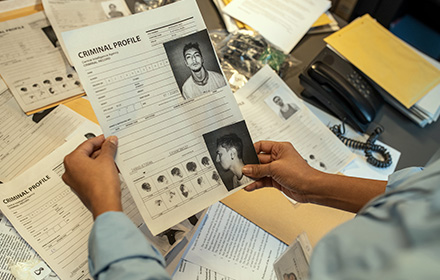
A criminal record, often called a criminal history record, is documentation of a person's recorded involvement in the criminal justice system.
Depending on the case and the records maintained, it may contain information such as:
- Arrests and arrest dates
- The law enforcement agency involved
- Criminal charges filed
- Court case information
- The outcome or disposition of a case
- Convictions and sentences
- Certain probation or other court-supervision information
- Records of cases that were dismissed or ended without a conviction
Not every record contains all these details, and different agencies maintain different types of information.
For example, a state criminal history record, a county court docket, a federal criminal record, and a private background screening report are not necessarily identical.
It is important to understand which record is being reviewed before assuming what another person or organization will see.
What Information Can Show Up on Your Criminal Record?
The following are common categories of information that may appear in criminal history records or related background-check sources.
1. Arrests
An arrest may appear on a criminal history record even if the person was never convicted.
In Florida, FDLE explains that criminal history records are created when a person is arrested and fingerprinted. The record may include the eventual disposition of the case, including a dismissal, acquittal, or other outcome.
This means that an arrest and a conviction are two different things.
An arrest indicates that a person was taken into custody or otherwise recorded as arrested. It does not, by itself, establish that the person committed a crime.
2. Criminal Charges
A criminal history record or court record may show the charges associated with an arrest.
Charges can include misdemeanors, felonies, and other offenses processed through the criminal courts.
The record may also show whether prosecutors filed formal charges, whether charges were amended, or whether the case ended before trial.
The appearance of a charge does not necessarily mean the defendant was found guilty.
3. Convictions
A conviction is one of the most consequential entries that may appear on a criminal record.
Depending on the offense and the court's disposition, a record may show the offense of conviction, the date, and sentencing information.
A conviction can have consequences beyond the sentence imposed by the court. Depending on the circumstances, it may affect employment opportunities, occupational licensing, housing applications, immigration matters, or certain civil rights.
The impact depends on the offense, the applicable law, the screening process, and the circumstances of the individual.
4. Dismissed Cases
A dismissed criminal case may still appear on a Florida criminal history record.
This is a common source of confusion. A dismissal generally means the prosecution did not result in a conviction through that case, but it does not automatically erase the arrest or related criminal history information.
FDLE specifically addresses why records may remain after charges have been dropped, dismissed, abandoned, or nolle prossed.
For example, a person may have been arrested, formally charged, and later had the case dismissed. A background check could still reveal the arrest and the dismissal unless the record is restricted through an applicable legal process.
Whether the record can be sealed or expunged depends on eligibility and the circumstances of the case.
5. Acquittals and Not-Guilty Verdicts
If a person is acquitted or found not guilty, the result may be recorded as the disposition of the case.
However, the arrest and court history may still exist in the relevant records.
Being found not guilty is legally different from having a case dismissed before trial, but neither outcome necessarily means that every associated record automatically disappears.
In Florida, certain records involving acquittals or dismissed charges may qualify for expungement, subject to statutory requirements.
6. Withheld Adjudication
Florida law recognizes dispositions in which a court withholds adjudication of guilt. This is not always the same as a dismissal or a finding of not guilty.
A withheld adjudication does not mean that the arrest and court case never happened. The underlying record may still exist, and the disposition can have consequences for eligibility to seal or expunge a record.
Florida's sealing and expungement laws have specific eligibility requirements, including restrictions related to prior adjudications and certain offenses.
Because the legal consequences can differ from one case to another, it is important to review the exact court disposition rather than relying on a general description of the outcome.
7. Sentencing and Probation Information
Depending on the records searched, a background check may reveal sentencing information associated with a criminal case.
This can include a sentence imposed by the court, probation, or other conditions associated with the disposition.
Not every background check provides the same level of detail. A basic employment screening, a court-record search, and a criminal history review conducted by an authorized government agency may produce different results.
8. Federal Criminal Cases
A criminal record may also involve a federal case rather than a Florida state case.
Federal criminal cases are maintained through federal court and criminal justice systems. A background check's ability to identify federal records depends on the sources searched and the scope of the screening.
Someone who has a record in Florida should not assume that a Florida state record search necessarily reflects every possible federal or out-of-state record.

Does a Criminal Record Show Every Arrest?
Not necessarily in every background check, but an arrest may remain in criminal history records even if no conviction resulted.
Whether an arrest appears in a particular report depends on several factors, including:
- Whether the arrest was recorded and fingerprinted
- Whether the relevant agency maintains the record
- Which databases the background check searches
- Whether the case disposition was updated
- Whether a sealing or expungement order applies
- Whether the person or organization conducting the search is legally permitted to access the information
A background check that does not reveal an arrest is not necessarily proof that no record exists anywhere.
Likewise, the appearance of an arrest does not establish guilt.
Do Dismissed Charges Show Up on a Background Check in Florida?
They may. When charges are dismissed, the criminal history record does not necessarily disappear. FDLE explains that adult criminal history records generally remain publicly accessible unless sealed or expunged, subject to the applicable laws governing access.
For example, a person might have a dismissed misdemeanor case that still appears in a record search. The report may show the arrest, the charge, and the dismissal.
This can be confusing for someone who believes that the dismissal automatically cleared their record.
If a dismissed case continues to appear, it may be worth checking the official disposition and determining whether the record qualifies for sealing or expungement.
What Is the Difference Between a Criminal Record and a Background Check?
Although the terms are often used interchangeably, they are not exactly the same.
A
criminal history record is information maintained by criminal justice agencies or other authorized record custodians.
A
background check is a search or screening process that may examine one or more sources of information.
Depending on its purpose and scope, a background check may include:
- State criminal history records
- County or local court records
- Federal court records
- Records from other states
- Certain driving records
- Professional licensing information
- Other information permitted by applicable law
Not every background check includes every category.
For instance, a landlord's screening process may differ from a background investigation for a position involving sensitive responsibilities or a government security clearance.
The important question is not simply whether you have a criminal record, but which records are being searched, what the report contains, and who is legally permitted to access the information.
Who Can See Your Criminal Record in Florida?
Access depends on the type of record and the applicable laws.
In Florida, adult criminal history records are generally publicly accessible unless sealed or expunged, subject to statutory rules and exceptions.
Different organizations may conduct background checks for different purposes, including:
- Employers
- Landlords and property management companies
- Licensing authorities
- Government agencies
- Law enforcement agencies
- Courts
- Other entities authorized by law
Access is not unlimited. Certain records may be confidential, restricted, sealed, or expunged, and special rules can apply to particular background checks.
Some government agencies and other legally authorized entities may retain access to information that is not available to the general public.
Therefore, sealing or expunging a record can significantly affect access, but it does not necessarily mean that every agency or authorized entity will be unable to obtain any information about the case.
Can an Employer See Your Criminal Record?
An employer may be able to discover criminal history information through a background check, depending on the information searched, the applicable law, and the purpose of the screening.
The report may identify convictions and, in some circumstances, arrests or cases that did not result in convictions.
However, employers must comply with applicable federal, state, and local requirements when obtaining and using background reports.
For example, when an employer uses a third-party consumer reporting agency to conduct an employment background check, the Fair Credit Reporting Act (FCRA) imposes requirements concerning authorization and certain procedures before adverse action is taken based on the report.
The legal rules can vary depending on the employer, the job, the record, and the type of background check.
If a criminal record appears on an employment screening report and you believe the information is inaccurate or improperly reported, you may have options for disputing the report or seeking legal guidance.
Can a Landlord See Your Criminal Record?
A landlord may conduct a background screening that includes criminal history information.
Whether a particular arrest, charge, or conviction appears depends on the screening service, records searched, and applicable legal restrictions.
The presence of a criminal record does not automatically mean every landlord will deny an application. Housing decisions can depend on the circumstances, the landlord's policies, and applicable fair-housing and consumer-reporting laws.
If a dismissed case or inaccurate record appears in a rental screening report, reviewing the underlying court records and the screening report may help determine whether a correction or dispute is appropriate.

Does a Criminal Record Ever Disappear?
A criminal record does not necessarily disappear simply because time has passed.
In Florida, some eligible records may be sealed or expunged under statutory procedures. However, eligibility depends on the type of disposition, the person's history, the offense involved, and other legal requirements.
It is important to understand the distinction between sealing and expungement.
What Does It Mean to Seal a Criminal Record?
Sealing generally restricts public access to a qualifying criminal history record.
A sealed record may still be available to certain government agencies or other entities authorized by law.
Florida's sealing statute, section 943.059, establishes eligibility requirements and procedures for court-ordered sealing.
What Does It Mean to Expunge a Criminal Record?
Expungement generally involves the destruction or obliteration of criminal history records held by criminal justice agencies, subject to statutory exceptions.
Florida's expungement statute, section 943.0585, establishes eligibility criteria and a court-ordered process. FDLE retains certain information under the statute, and the law limits access to that information.
Neither process should be assumed to apply automatically after a dismissal or acquittal.
Can You Seal or Expunge a Criminal Record After a Case Is Dismissed?
Potentially, yes.
Florida law allows some people whose cases were dismissed or otherwise ended without a conviction to seek expungement, provided they satisfy the statutory requirements. Eligibility can depend on factors such as:
- Whether formal charges were filed
- How the case ended
- Whether the person was adjudicated guilty
- Whether the offense is excluded from eligibility
- Whether the person has previously sealed or expunged a record
- Whether court supervision has ended
- Whether the required certification and court procedures are completed
Florida Statutes section 943.0585 describes the eligibility criteria for court-ordered expungement, while section 943.059 addresses court-ordered sealing.
Receiving a certificate of eligibility is not the same as having a record sealed or expunged. The required legal process must still be completed, including obtaining the appropriate court order when required.
Because the requirements are specific, a dismissed case should be evaluated individually before assuming that it qualifies.
What Should You Do If Your Criminal Record Contains Incorrect Information?
Inaccurate criminal history information can create unnecessary complications when applying for employment, housing, or professional opportunities.
If you believe your record is incorrect, consider taking these steps:
1. Obtain a Copy of the Record
Review the criminal history report or background check to identify the information that appears to be wrong or incomplete.
2. Check the Official Court Disposition
If the report concerns a criminal case, obtain the official court disposition or dismissal order when available.
3. Identify the Source of the Error
The issue could involve an incorrect identity match, a missing disposition, outdated information, or a record that has not been updated after a court action.
4. Dispute Inaccurate Screening Information
If a third-party consumer reporting agency prepared the background check, you may be able to dispute inaccurate or incomplete information through the agency.
5. Ask Whether Sealing or Expungement Is Available
If the record is accurate but may qualify for legal relief, an attorney can help assess whether a sealing or expungement process is appropriate.
Correcting an error and sealing or expunging an accurate record are different processes. The appropriate approach depends on the issue.
How Donet, McMillan & Trontz, P.A. Can Help
A criminal case can have consequences long after the court proceedings end. Understanding what remains on your record can help you make informed decisions about your next steps.
At Donet, McMillan & Trontz, P.A., we understand that criminal history concerns can create uncertainty about employment, housing, and future opportunities.
Depending on your circumstances, an attorney can help you understand the disposition of your criminal case, evaluate potential eligibility for record sealing or expungement, and identify issues that may require further review. This may include examining:
- Arrest and charging records
- Dismissal orders and court dispositions
- Convictions and sentencing records
- Eligibility for sealing or expungement
- Errors or inconsistencies in criminal history information
- The potential impact of a criminal case on future legal matters
A dismissed case, an acquittal, a withheld adjudication, and a conviction can have different consequences. Reviewing the actual records is often the best way to understand your situation.
If you are concerned about what appears on your criminal record, seeking legal guidance can help clarify your options.
Frequently Asked Questions About Criminal Records in Florida
What information shows up on a criminal record?
Depending on the records searched, it may include arrests, criminal charges, court dispositions, convictions, sentencing information, and other criminal history information.
Does an arrest show up if I was never convicted?
It may. Florida criminal history records can include arrests and the eventual disposition of the case, even when no conviction occurs.
Do dismissed charges appear on a Florida background check?
They may. A dismissal does not automatically erase the underlying criminal history record. Eligible records may qualify for sealing or expungement.
Does a not-guilty verdict remove an arrest from my record?
Not automatically. The disposition may be recorded, but associated criminal history information can remain unless an applicable process restricts or removes it.
Can an employer see a dismissed case?
Depending on the background check and applicable law, a dismissed case may appear. Whether the employer can obtain and use that information depends on the records searched and the legal rules governing the screening.
What is the difference between sealing and expungement?
Sealing generally restricts public access to a record, while expungement generally requires the destruction or obliteration of records held by criminal justice agencies, subject to statutory exceptions. Florida law establishes separate requirements for each process.
Can I expunge my criminal record if the charges were dismissed?
Potentially. Florida law allows some dismissed cases to qualify for expungement, but eligibility requirements and exclusions apply.
Does a criminal record disappear after seven years?
There is no universal rule that every criminal record disappears after seven years. Record retention, access, and reporting depend on the type of record, the applicable law, the screening process, and whether sealing or expungement applies.
Can I check my own criminal record in Florida?
Yes. FDLE provides information about obtaining and reviewing Florida criminal history records, including personal review procedures.
If my record is expunged, can anyone still see it?
Expungement restricts access under Florida law, but certain information may remain available to specifically authorized entities or under statutory exceptions. The effect depends on the law and the purpose of the inquiry.
Should I speak with an attorney about my criminal record?
If a record is affecting your opportunities, contains inaccurate information, or may qualify for sealing or expungement, an attorney can help you understand the applicable requirements and potential options.

Final Thoughts: Know What Your Criminal Record Actually Shows
Your criminal record may contain more information than you expect, including arrests and cases that did not result in a conviction. At the same time, the existence of a record does not automatically mean that every employer, landlord, or member of the public can access all of its details.
In Florida, the outcome of a criminal case and the availability of record sealing or expungement can make a significant difference.
If you are concerned about an arrest, a dismissed case, or a conviction appearing on your criminal record, the first step is to review the official records and determine what legal options may be available.
Donet, McMillan & Trontz, P.A. can help you better understand the legal consequences of a criminal case and explore potential next steps based on your circumstances.
Legal Disclaimer
This article is for general informational and educational purposes only and does not constitute legal advice. Criminal history, background-check, sealing, and expungement laws are subject to specific requirements and exceptions. The information in a particular report and the rights available to an individual depend on the facts and applicable law. Consult a qualified attorney regarding your specific situation.