How Do Military Investigations Work?
November 06, 2026
A military investigation can have serious consequences for a service member's career, reputation, freedom, and future. Whether an investigation involves allegations of misconduct, assault, drug offenses, fraud, theft, sexual assault, or another criminal offense, understanding the process is essential.
Unlike a typical civilian criminal investigation, a military investigation may involve military law enforcement agencies, a chain of command, military prosecutors, and procedures established under the Uniform Code of Military Justice (UCMJ).
But how do military investigations actually work? Who conducts them? Can investigators question you without a lawyer? And what happens after an investigation is completed?
A military investigation is a process used to gather facts, evaluate evidence, and determine whether alleged misconduct or criminal activity may have occurred. An investigation does not automatically mean that charges will be filed or that a service member will be found guilty.
At Donet, McMillan & Trontz, P.A., we understand the importance of knowing how criminal investigations operate and why protecting your legal rights from the beginning matters. This guide explains the typical stages of a military criminal investigation, the agencies involved, the rights that may apply, and the potential consequences of an investigation.
This article focuses primarily on U.S. military criminal investigations under the UCMJ. Administrative investigations, security-clearance investigations, and investigations involving civilian employees or contractors may follow different rules.
What Is a Military Investigation?
A military investigation is an inquiry into suspected criminal conduct, violations of military regulations, or other incidents requiring official review.
The purpose depends on the type of investigation. A criminal investigation may seek to determine whether an offense occurred, identify the people involved, collect evidence, and develop information for potential prosecution.
An administrative investigation may instead examine whether military policies were followed, whether leadership decisions were appropriate, or whether corrective action is necessary.
Military criminal investigations can involve allegations such as:
- Assault and other violent offenses.
- Sexual assault and sexual misconduct.
- Drug-related offenses.
- Theft, fraud, and financial misconduct.
- Unauthorized absence or desertion.
- Cybercrime and misuse of government systems.
- Domestic violence.
- Abuse or mistreatment.
- Property crimes.
- Other offenses under the UCMJ or applicable federal law.
The nature of the allegations, the service branch, and the circumstances determine which agency investigates and which legal procedures apply.
Who Conducts Military Criminal Investigations?
Different investigative organizations serve the U.S. armed forces. The agency involved generally depends on the branch of service, the nature of the allegations, and the circumstances of the incident.
Common military investigative agencies
- Army Criminal Investigation Division (Army CID): Investigates serious criminal offenses involving the Army and matters within its investigative authority. Its responsibilities include felony investigations, cybercrime, forensic support, and other significant criminal matters.
- Naval Criminal Investigative Service (NCIS): Conducts criminal investigations and other investigative activities involving the Department of the Navy and matters within its jurisdiction.
- Air Force Office of Special Investigations (AFOSI): Conducts criminal and specialized investigations involving the Department of the Air Force, including matters involving Space Force within its assigned responsibilities.
- Coast Guard Investigative Service (CGIS): Investigates criminal matters within the Coast Guard's investigative authority.
Military police may also respond to incidents, secure scenes, make arrests where authorized, and conduct certain investigations. Commanders may initiate or oversee administrative inquiries, while specialized criminal investigators handle matters within their jurisdiction.
The agencies do not all investigate every type of allegation. Some cases may also involve coordination with civilian law enforcement or other federal agencies.
How Does a Military Investigation Begin?
Military investigations can begin in several ways.
A commanding officer may receive a report of suspected misconduct. A service member, civilian employee, or other person may report an incident. Military police may respond to an event, or investigators may identify potential criminal activity through an existing investigation.
The initial report does not establish that an offense occurred. Investigators must evaluate the available information.
Depending on the circumstances, the process may begin with:
- A complaint or allegation
- A report from a commanding officer
- A military police response
- A referral from another investigative agency
- Information from a witness
- Evidence suggesting possible criminal activity
- A report involving government property, systems, or personnel
Once the matter is referred to the appropriate authority, investigators determine what steps are necessary to establish the relevant facts.
Some investigations begin with limited information and expand as evidence develops. Others may involve a substantial amount of evidence before a particular service member is identified as a suspect.
What Happens During a Military Criminal Investigation?
The specific process varies, but many investigations involve several common stages.
1. Initial Assessment
Investigators assess the allegation and determine whether the matter falls within their authority.
They may identify the suspected offense, establish the basic timeline, determine whether immediate safety measures are necessary, and decide which evidence should be preserved.
At this stage, investigators may also determine whether another agency needs to be involved.
2. Interviews With Witnesses and Other Individuals
Investigators may interview the person who reported the incident, potential witnesses, and individuals who have relevant information.
They may ask questions about what happened, when it occurred, who was present, and whether documents or other evidence exist.
A person may initially be interviewed as a witness and later become a subject or suspect as new information emerges.
The person's role and the circumstances of the questioning matter when determining what rights and warnings apply.
3. Evidence Collection
Investigators may gather physical, documentary, digital, or forensic evidence. Examples include:
- Text messages and emails
- Photographs and videos
- Surveillance recordings
- Financial records
- Medical or forensic evidence, where lawfully obtained
- Government computer records
- Access logs and other electronic data
- Statements from witnesses
- Physical evidence recovered from a relevant location
Investigators must consider applicable legal requirements when obtaining and handling evidence. Questions about consent, search authorization, warrants, and the admissibility of evidence can become important in a later criminal proceeding.
4. Questioning a Suspect
If investigators believe a service member may have committed an offense, they may seek to interview or question that person.
This stage can be particularly important because statements may become evidence in a later court-martial or other proceeding.
Article 31(b) of the UCMJ provides specific protections when a person subject to the UCMJ interrogates or requests a statement from an accused or a person suspected of an offense. Before covered questioning, the person must be informed of the nature of the accusation and advised of the right not to make a statement and that any statement may be used as evidence in a court-martial.
The precise application of Article 31 depends on the circumstances. Not every conversation with a military member is a covered interrogation, and the rules can differ depending on who is asking questions and in what capacity.
If you are the subject of a military investigation, consider obtaining legal advice before participating in an interview about the allegations.
5. Analysis and Forensic Review
Some investigations require specialized analysis of digital devices, financial transactions, physical evidence, or laboratory results.
Investigators may compare witness statements, review timelines, examine inconsistencies, and assess whether the available evidence supports or contradicts the allegation.
This stage can take time, particularly in complex cases involving multiple witnesses, extensive records, or specialized testing.
6. Investigative Report
Investigators generally document their findings in reports and supporting records.
Depending on the agency and type of investigation, the report may include a summary of the allegations, investigative steps, witness statements, evidence collected, and the results of forensic examinations.
Investigators may identify evidence supporting the allegation as well as information that contradicts it. The exact reporting requirements depend on the agency and the type of investigation.
 7. Review and Decision About Next Steps
After the investigative work is completed, the findings may be reviewed by appropriate authorities.
A criminal investigation may be referred for prosecutorial review or further action. The matter may also result in additional investigative steps, administrative action, or closure without criminal charges.
Investigators do not necessarily make the final decision about whether a service member will be prosecuted. The decision depends on the applicable process and the authorities responsible for reviewing and disposing of the case.
Army CID, for example, describes its role as investigating criminal activity and presenting investigative information to the appropriate authorities, which determine what action should follow.
What Is the Difference Between a Criminal Investigation and an Administrative Investigation?
Not every military investigation is a criminal investigation.
A criminal investigation seeks to determine whether a criminal offense occurred and whether the evidence supports potential prosecution.
An administrative investigation may examine policy compliance, workplace conduct, leadership decisions, safety issues, or other matters requiring command review.
The distinction matters because the procedures, potential consequences, and rights involved may differ.
For example, an administrative inquiry may lead to corrective action, adverse personnel decisions, or other administrative consequences. A criminal investigation may lead to consideration of charges under the UCMJ or another applicable criminal law.
Some incidents may involve both types of investigation. A service member could face a criminal investigation and a separate administrative review arising from the same events.
The rules governing interviews, disclosures, evidence, and potential consequences can be different in each process. Do not assume that protections or procedures applicable to a criminal interview operate identically during an administrative inquiry.
What Rights Do You Have During a Military Investigation?
The rights available to a service member depend on the circumstances, the person's status, the type of investigation, and the stage of the proceedings.
Several protections may be especially important.
The Right Not to Make an Incriminating Statement
Article 31 of the UCMJ prohibits compelling a person subject to the UCMJ to incriminate themselves. Article 31(b) also establishes specific warning requirements for covered questioning of an accused or a person suspected of an offense.
If you believe you are being questioned as a suspect, you should not assume that an informal interview is legally insignificant.
You can ask whether you are suspected of an offense and seek legal advice before answering questions about the allegations.
The Right to Legal Counsel
A service member facing a potential criminal investigation may have access to military defense counsel or may be able to retain civilian counsel, depending on the circumstances and stage of the proceedings.
Article 38 of the UCMJ addresses representation by counsel in general and special courts-martial and at Article 32 preliminary hearings. It recognizes representation by civilian counsel provided by the accused, as well as military counsel under the applicable rules.
The availability and role of counsel during an investigative interview may differ from representation rights at a court-martial. If you are contacted by investigators, ask about the applicable rights and consult a qualified attorney.
The Right to Challenge the Evidence
If criminal charges are brought, the defense may be able to challenge evidence, question witnesses, raise legal objections, and present a defense through the applicable military justice procedures.
The available procedures depend on the type of proceeding and the stage of the case.
For example, Article 32 of the UCMJ provides for a preliminary hearing before referral of charges to a general court-martial, subject to applicable exceptions and waiver procedures. The hearing addresses matters including whether the charges allege an offense, whether probable cause exists, jurisdiction, and a recommendation about the case's disposition.
These procedures are distinct from the investigative process itself.
Can You Be Charged Without Being Arrested During a Military Investigation?
An investigation does not necessarily involve immediate arrest or confinement.
Depending on the circumstances, investigators may collect evidence, interview witnesses, and submit findings without taking the subject into custody.
If charges are brought, the military justice system has procedures governing the handling of the case and any pretrial restraint.
Article 10 of the UCMJ addresses arrest or confinement of persons charged with offenses under the Code and includes requirements relating to informing the accused of the specific offense and taking steps toward trial or dismissal and release.
Whether a person may be apprehended, placed in arrest, or confined depends on the applicable legal authority and facts. Being investigated does not automatically mean that confinement will occur.
How Long Do Military Investigations Take?
There is no single timeline for every military investigation.
Some matters can be resolved relatively quickly when the facts are straightforward and the relevant evidence is readily available. Other investigations may continue for months or longer.
Factors that can affect the duration include:
- The seriousness and complexity of the allegations
- The number of witnesses
- The volume of digital or documentary evidence
- The need for forensic testing
- Coordination with civilian or federal agencies
- The availability of witnesses and investigators
- Additional allegations discovered during the investigation
- Further review requested by the appropriate authorities
A long investigation does not, by itself, prove that the allegations are true or that charges will be filed.
Similarly, the absence of immediate action does not necessarily mean the matter has been closed.
If you are concerned about an ongoing investigation, a qualified attorney can help you understand the procedural posture and identify steps that may be appropriate in your circumstances.
What Happens After a Military Investigation?
The outcome depends on the evidence, the type of investigation, and the authority responsible for deciding what happens next.
Possible outcomes of a criminal investigation may include:
- Closure without criminal charges
- Additional investigative work
- Referral for prosecutorial review
- Charges under the UCMJ, when authorized and supported by the applicable process
- Referral to another jurisdiction or agency
- Administrative action separate from criminal proceedings
If a case proceeds through the military justice system, the process may include preferral of charges, review by the appropriate authorities, an Article 32 preliminary hearing when required, and possible referral to a court-martial.
Not every case proceeds through every stage. The applicable procedures depend on the charges, the forum, and the legal decisions made along the way.
What Is an Article 32 Preliminary Hearing?
An Article 32 preliminary hearing is a formal stage of the military justice process that may occur before charges are referred to a general court-martial.
It is not the same as the initial investigation.
Under 10 U.S.C. § 832, the hearing generally considers whether the charges allege an offense under the UCMJ, whether probable cause supports the charges, whether the court-martial has jurisdiction, and what disposition should be recommended. The accused has rights relating to counsel, cross-examination, and presenting relevant evidence, subject to the applicable rules.
A preliminary hearing can be an important opportunity to assess the case before trial, but it is not a full trial and does not determine guilt in the same manner as a court-martial.
Whether a hearing is required and how it proceeds depend on the charges and applicable law.
Can a Military Investigation Affect Your Career?
Yes. A military investigation may affect a service member's professional life, although the impact depends on the allegations, the service branch, and the outcome. Potential consequences may include:
- Restrictions or changes to assigned duties.
- Changes in access to certain facilities or systems.
- Security-clearance review.
- Administrative actions.
- Promotion or assignment concerns.
- Disciplinary action.
- Criminal charges or court-martial proceedings, if warranted.
These consequences are not automatic. An investigation is not a finding of guilt, and the outcome may be that no criminal charges are brought.
However, an administrative decision and a criminal proceeding are separate processes. A criminal case that does not result in a conviction does not necessarily resolve every administrative or personnel issue arising from the same incident.
If an investigation threatens your career, it is important to understand which process is underway and what legal protections may apply.
What Should You Do If You Are Under Military Investigation?
If you learn that you are the subject of a military investigation, take the situation seriously even if no formal charges have been filed.
1. Clarify Your Status
If appropriate, seek to understand whether you are being contacted as a witness, subject, or suspect. Your status may change as the investigation develops.
2. Seek Legal Advice Early
Consider contacting qualified military defense counsel or a civilian attorney experienced in military criminal defense before answering questions about the allegations.
3. Do Not Guess or Speculate
If you are unsure about a fact, avoid guessing. Inaccurate or inconsistent statements can complicate an investigation.
4. Preserve Relevant Evidence
Keep potentially relevant messages, records, photographs, and other information. Do not destroy, alter, or fabricate evidence.
5. Avoid Discussing the Allegations Publicly
Public posts or informal conversations may create additional complications. Discuss the details with your attorney and avoid attempting to coordinate accounts with witnesses.
6. Follow Lawful Orders and Applicable Requirements
Continue to comply with lawful duties and requirements. If an instruction or administrative action raises a legal concern, seek advice about how to address it appropriately.
7. Do Not Assume the Investigation Will End Without Action
Even if investigators do not contact you for a period of time, the investigation may still be active. Obtain reliable information about the status of the matter when appropriate.
Taking these steps can help you avoid preventable mistakes while determining how best to respond.
How Donet, McMillan & Trontz, P.A. Can Help
Military investigations can involve complicated questions about criminal procedure, constitutional protections, military regulations, and potential career consequences.
At Donet, McMillan & Trontz, P.A., we understand the importance of evaluating the specific facts and applicable law when someone is facing criminal allegations.
Depending on the nature of the matter and the firm's authority to handle it, legal guidance may help clarify the allegations, identify potential defenses, evaluate evidence, and understand the possible consequences of a criminal proceeding.
Military justice matters can involve specialized rules and procedures. Anyone facing a military investigation should confirm that their attorney has the appropriate experience and authority to represent them in the relevant military forum. Military defense counsel and civilian attorneys with military justice experience may be important resources, depending on the case.
If an investigation also involves federal or civilian criminal allegations, it is important to determine how those proceedings interact with the military matter.
An investigation does not automatically mean that charges will be filed or that you will be found guilty. Understanding your rights and obtaining appropriate legal advice early can help you make informed decisions.
Frequently Asked Questions About Military Investigations
What is a military investigation?
A military investigation is an official inquiry into suspected criminal activity, misconduct, or another incident requiring review. A criminal investigation may gather evidence for potential prosecution under the UCMJ or applicable federal law.
Who investigates crimes in the military?
The investigative agency depends on the branch and circumstances. Agencies include Army CID, NCIS, AFOSI, and CGIS, along with military police and other authorities acting within their respective responsibilities.
Can military investigators question me without a lawyer?
The applicable rules depend on the circumstances. Article 31(b) requires specific warnings for covered questioning of an accused or suspected person by someone subject to the UCMJ. You should seek legal advice before answering questions about allegations that may expose you to criminal liability.
What is Article 31 of the UCMJ?
Article 31 addresses compulsory self-incrimination and establishes warning requirements for certain military interrogations. It advises covered suspects of the nature of the accusation, their right not to make a statement, and the potential use of statements as evidence at a court-martial.
How long does a military investigation take?
There is no universal deadline or timeline for every investigation. The duration depends on the allegations, evidence, witness availability, forensic testing, and other circumstances.
Can an investigation end without charges?
Yes. Depending on the evidence and applicable process, an investigation may close without criminal charges, lead to additional investigative work, or result in referral for further action.
Can I be punished before the investigation is finished?
Certain administrative measures or legally authorized forms of restraint may occur before a criminal case is resolved. The authority for those measures and the rights available depend on the circumstances. An investigation alone is not a finding of guilt.
What is an Article 32 hearing?
An Article 32 preliminary hearing is a pretrial procedure that generally occurs before referral of charges to a general court-martial, subject to applicable exceptions and waiver procedures. It addresses issues such as probable cause, jurisdiction, and the recommended disposition of charges.
Can a military investigation affect my security clearance?
It may prompt a review, depending on the allegations, the person's duties, and the applicable security rules. A review or investigation does not automatically mean that a clearance will be revoked.
Can civilian law enforcement investigate the same incident?
Yes. Depending on jurisdiction and the facts, military and civilian authorities may coordinate or conduct related investigations. The applicable criminal process depends on the offense, the people involved, and the relevant legal authority.
Should I speak to a civilian attorney or military defense counsel?
That depends on the case and the stage of the proceedings. Military defense counsel may be available under applicable rules, and a civilian attorney may also be retained in circumstances permitted by law. If the case involves military-specific procedures, confirm that the attorney has relevant military justice experience.
Final Thoughts: Understand the Process and Protect Your Rights
Military investigations can be complex, and the consequences may extend beyond the immediate allegations. The process may involve specialized investigators, interviews, evidence collection, forensic analysis, command review, and potential proceedings under the UCMJ.
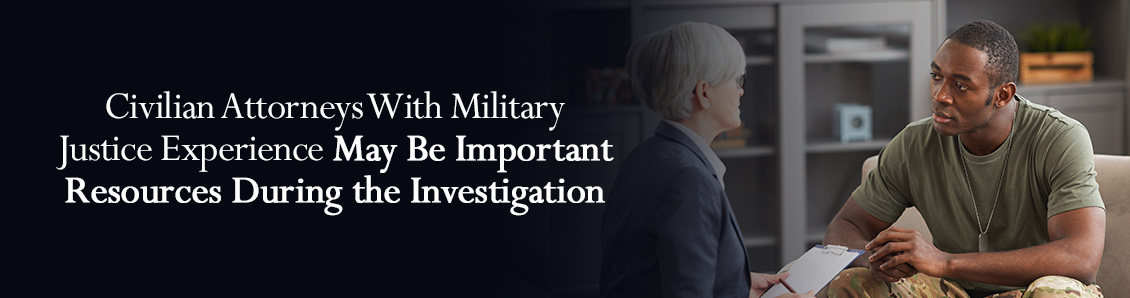
Knowing the difference between a criminal and administrative investigation, understanding the protections provided by Article 31, and seeking legal advice before making important decisions can help you navigate the process more carefully.
Most importantly, being investigated does not automatically mean you will be charged or convicted. The outcome depends on the evidence, the applicable law, and the decisions made by the authorities responsible for the case.
If you are facing military-related criminal allegations, seek guidance from an attorney qualified to address the specific jurisdiction and procedures involved.
Legal Disclaimer
This article is for general informational and educational purposes only and does not constitute legal advice. Military justice rules, investigative procedures, and available rights depend on the facts, service status, type of investigation, and applicable law. This article does not create an attorney-client relationship. Donet, McMillan & Trontz, P.A. is a Florida criminal defense law firm; anyone facing a military investigation should confirm that the firm or any attorney consulted is qualified and authorized to handle the specific military justice matter.