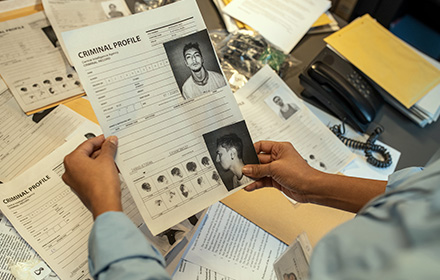
How to Protect Your Rights After an Arrest
November 23, 2026
Being arrested can be frightening and overwhelming. You may have questions about why you were arrested, what will happen next, whether you will be released, and how the situation could affect your future.
In the moments following an arrest, it can be difficult to know what to say or do. You may feel pressured to explain yourself, answer questions, or cooperate in the hope that the situation will resolve quickly. However, decisions made during this time can have important consequences for your criminal defense.
Knowing how to protect your rights after an arrest is an important first step toward protecting your future.
In Florida, people accused of crimes have legal protections, including the right to remain silent in circumstances covered by the Fifth Amendment, the right to legal counsel, and the right to challenge the prosecution's allegations through the legal process. Understanding how these protections work can help you avoid common mistakes and make informed decisions.
At Donet, McMillan & Trontz, P.A., we understand the uncertainty that follows an arrest. This guide explains practical steps to take, rights to be aware of, and mistakes to avoid while a criminal case is pending.
1. Remain Calm and Avoid Resisting Arrest
An arrest can be stressful, particularly if you believe the allegations are mistaken or that law enforcement has misunderstood what happened.
Even so, it is important to remain as calm as possible and avoid escalating the encounter. Consider these practical steps:
- Keep your hands visible when instructed.
- Avoid sudden movements that could be misunderstood.
- Do not threaten officers or attempt to physically resist.
- Follow lawful instructions while avoiding unnecessary statements about the allegations.
- If you believe your rights have been violated, document the details later and discuss them with your attorney.
Remaining calm does not mean that you agree with the allegations or waive your legal rights. It can help reduce unnecessary conflict while allowing you to address potential legal issues through the proper channels.
If you believe an officer acted unlawfully, your attorney can evaluate the circumstances and determine whether the conduct may be relevant to your defense.
2. Know Your Right to Remain Silent
One of the most important protections after an arrest is the right to remain silent in circumstances covered by the Fifth Amendment.
Statements made during an investigation may become evidence in a criminal case. Even an attempt to explain your side of the story can create misunderstandings or introduce details that prosecutors may later use against you.
You generally do not have to answer investigative questions about the alleged crime simply because an officer asks them. However, particular circumstances may involve separate legal obligations, so it is important not to assume that every interaction or question can be handled identically.
You can clearly state that you wish to remain silent and want to speak with an attorney before answering questions.
For example, you might say:
"I am exercising my right to remain silent, and I would like to speak with an attorney."
Once you invoke your rights, avoid continuing to discuss the facts of the case. Do not assume that casual conversation, informal questioning, or comments made while waiting are necessarily harmless.
The safest approach is to seek legal advice before answering questions about the allegations.
3. Request an Attorney as Early as Possible
A criminal defense attorney can help you understand the allegations, explain your rights, and advise you on how to handle questioning and subsequent court proceedings.
Florida Statutes § 901.24 recognizes an arrested person's right to consult privately with an attorney licensed to practice in Florida, subject to reasonable limits concerning the time and circumstances of consultation.
If you are arrested, clearly communicate that you want an attorney. Legal counsel may help you:
- Understand the charges or allegations.
- Avoid making statements that could harm your defense.
- Evaluate whether law enforcement followed applicable procedures.
- Address release and bond issues.
- Identify evidence that may support your defense.
- Explain the next steps in the criminal process.
If you cannot afford an attorney, you may be eligible for appointed counsel, depending on your financial circumstances and the nature of the case. Ask the appropriate authorities or the court about the procedure for requesting representation.
You do not need to prove your innocence before asking for legal assistance.
4. Understand Your Miranda Rights
You may have heard the phrase "You have the right to remain silent" in television shows or movies. These warnings are commonly associated with Miranda rights.
Under the Miranda rule, law enforcement generally must provide appropriate warnings before conducting custodial interrogation that falls within the rule's requirements.
The warnings address the right to remain silent, the potential use of statements in court, the right to consult with an attorney and have one present during questioning, and the availability of appointed counsel for those who qualify.
However, not every interaction with law enforcement requires Miranda warnings. Whether the rule applies depends on the circumstances, including whether the person is in custody and subject to interrogation.
The absence of a Miranda warning does not automatically mean that an arrest is unlawful or that every statement will be excluded from evidence.
If you believe officers questioned you in circumstances that violated your rights, tell your attorney exactly what happened. Your attorney can evaluate whether a legal challenge may be appropriate.
5. Do Not Lie, Guess, or Speculate When Speaking With Authorities
Protecting your rights does not mean that you should lie to law enforcement or provide fabricated information.
If you choose to invoke your right to remain silent, communicate that decision clearly rather than inventing an explanation.
If you are asked a question and are unsure how to respond, avoid guessing or speculating about facts you do not remember. You can request legal counsel before answering investigative questions.
False statements can create additional legal complications, depending on the circumstances and applicable law.
Your attorney can help you understand which questions you are legally required to answer, which questions you may decline to answer, and how to protect your interests without creating additional problems.
6. Avoid Discussing Your Case With Other People
After an arrest, you may feel the need to explain what happened to friends, relatives, coworkers, or people who witnessed the incident.
Before discussing the facts, remember that statements made outside the attorney-client relationship may not receive the same legal protection as confidential communications with your lawyer.

Potential risks include:
- Someone repeating your statements to investigators.
- Messages or recordings becoming evidence.
- Differences between your statements and other evidence being used to challenge your credibility.
- Posts or comments being taken out of context.
- Attempts to coordinate stories creating additional legal concerns.
This does not mean you must avoid all communication with your loved ones. You can seek personal support without discussing the details of the allegations.
For legal advice about the facts of the case, speak privately with your attorney.
7. Be Careful About Social Media
Social media can create additional risks when you are facing criminal allegations.
Posts, photographs, direct messages, videos, and comments may be preserved, shared, or reviewed as part of an investigation or legal proceeding.
Even a post that seems harmless may be interpreted differently when viewed alongside other evidence. After an arrest, consider avoiding posts about:
- The allegations or arrest
- The alleged victim or other involved individuals
- Witnesses or potential witnesses
- Evidence or law enforcement activity
- Your account of what happened
- Your opinions about the prosecution or court
Do not delete, alter, or destroy potentially relevant evidence in an attempt to conceal it. If you are concerned about existing posts or messages, ask your attorney how to handle them appropriately.
Avoiding public discussion of the case can help reduce unnecessary complications while your attorney evaluates the evidence.
8. Preserve Evidence That May Support Your Defense
Evidence can be important whether you are accused of a misdemeanor or a felony.
Information that appears insignificant at first may become relevant when your attorney evaluates the timeline, identifies witnesses, or examines inconsistencies in the allegations.
Potentially relevant evidence may include:
- Text messages and emails
- Photographs or videos
- Surveillance footage
- Receipts or transaction records
- Location or travel information
- Contact information for witnesses
- Documents showing relevant dates and times
- Information about communications with the alleged victim or other parties
Preserve relevant information in its original form when possible. Do not edit files, fabricate evidence, or encourage anyone to change their account of events.
If surveillance footage may be overwritten or other evidence may disappear, tell your attorney promptly so appropriate preservation steps can be considered.
Your attorney can help determine which evidence may be useful and how to obtain it lawfully.
9. Understand the Charges and Your Legal Options
An arrest does not automatically mean that you have been formally charged with a crime, and a charge does not establish guilt.
The legal process may involve an arrest report, an initial appearance, a decision about formal charges, evidence review, motions, negotiations, and potentially a trial.
Understanding the specific allegations is essential because different offenses carry different elements, potential penalties, and defenses. Depending on the case, your attorney may examine:
- Whether the allegations satisfy the elements of the charged offense.
- Whether the identification of the accused is reliable.
- Whether statements were obtained lawfully.
- Whether searches or seizures raise constitutional issues.
- Whether physical or digital evidence can be challenged.
- Whether witness accounts are inconsistent.
- Whether a negotiated resolution should be considered.
Do not assume that the initial description of an incident tells the entire story. The evidence and applicable law must be reviewed before you can make an informed decision about how to proceed.
10. Understand First Appearance and Release Conditions
Following an arrest in Florida, an initial court appearance is an important stage in the process.
Under Florida Rule of Criminal Procedure 3.130, a person who has been arrested and not previously released lawfully generally must be brought before a judge within 24 hours of arrest. The proceeding addresses matters such as the charges, the person's rights, counsel, and pretrial release or detention, subject to the rule's provisions.
Depending on the circumstances, the court may address bond, release conditions, or whether detention is permitted under applicable law.
If you are released, read and understand every condition imposed. These may include requirements to attend court, restrictions on contact with certain people, travel limitations, or other conditions.
Violating a court order or release condition can create additional legal problems.
If a condition is unclear or difficult to follow, speak with your attorney about seeking clarification or a lawful modification rather than ignoring it.
11. Attend Court as Required-Always check with your lawyer
Missing a required court appearance can have serious consequences.
Depending on the circumstances, a failure to appear may result in a warrant, additional proceedings, or other consequences under applicable law.
Keep track of every scheduled hearing, filing deadline, and instruction from the court. Make sure your attorney has current contact information and that you understand how you will receive notice of future proceedings.
If an emergency or unexpected problem may prevent you from attending a hearing, contact your attorney immediately. Do not assume that the court will automatically excuse your absence.
Following court requirements is an important part of protecting your position while the case is pending.
12. Do Not Contact an Alleged Victim or Witness if It Could Violate an Order
After an arrest, you may want to explain your side of the story to the alleged victim, resolve a misunderstanding, or ask a witness to clarify what happened.
However, direct contact can create serious complications, especially when a no-contact order, injunction, bond condition, or other restriction applies.
Even if the other person agrees to communicate, that agreement does not necessarily override a court order.
Avoid asking anyone to change their story, withhold evidence, or refuse to cooperate with authorities. Such conduct may create additional legal exposure.
If communication is necessary for a legitimate reason, discuss the situation with your attorney first. Your attorney can help determine whether contact is permitted and whether an appropriate lawful alternative is available.
13. Be Careful Before Agreeing to a Plea or Making Major Decisions
You may want to resolve the case as quickly as possible, particularly if the arrest has affected your work, family, or peace of mind.
However, accepting a plea agreement or making another significant decision without understanding the consequences can have long-term effects.
Before deciding how to proceed, make sure you understand:
- The specific charges involved
- The evidence supporting the allegations
- The possible penalties
- Whether the agreement results in a conviction
- Potential effects on your criminal history record
- Possible employment, licensing, or immigration consequences
- Any conditions you would be required to follow

A plea agreement may resolve a case without trial, but the fastest resolution is not necessarily the best outcome for every person.
Your attorney can explain the available options and help you evaluate them in light of the evidence, applicable law, and your priorities.
14. Consider Potential Immigration or Professional Licensing Issues
If you are not a U.S. citizen or hold a professional license, an arrest may raise concerns beyond the criminal court.
Depending on the offense, your immigration status, and the outcome of the case, criminal proceedings can affect certain immigration applications or other legal matters.
Similarly, a licensing authority may have separate rules regarding the reporting of arrests, criminal charges, or convictions.
These consequences vary widely. A pending charge may be treated differently from a conviction, and the rules depend on the relevant statute or regulatory framework.
If immigration status or professional licensing is a concern, raise it with your attorney early. In some circumstances, advice from an immigration attorney or licensing-law professional may also be appropriate.
15. Keep Records and Document What Happened
As soon as you can do so safely and appropriately, make a private record of your recollection of the arrest.
Depending on the circumstances, relevant details may include:
- The date, time, and location
- The names or identifying information of officers, if known
- What was said before and during the arrest
- Whether you were questioned and what warnings were provided
- Whether you requested an attorney
- Whether searches were conducted
- The names of witnesses
- Any injuries or property damage
- Documents you received from law enforcement or the court
Keep your notes factual and distinguish what you personally observed from what someone else told you.
Provide relevant information to your attorney so they can assess whether any procedural or constitutional issues may be present.
Do not secretly record conversations where doing so could violate applicable law, and do not interfere with law enforcement activity to collect evidence.
Common Mistakes to Avoid After an Arrest
Even when someone has a valid defense, certain actions can make a case more difficult to manage. Avoid these common mistakes:
- Talking about the allegations without legal advice: Statements may be used as evidence.
- Assuming the arrest proves guilt: An arrest is not a conviction.
- Ignoring court dates: Failure to appear can create additional problems.
- Violating release conditions: Restrictions must be followed unless lawfully changed.
- Posting about the case online: Public statements may be preserved or used in proceedings.
- Contacting witnesses inappropriately: Attempts to influence testimony or violate court orders can have serious consequences.
- Destroying or altering evidence: Preserve relevant information and ask your attorney how to handle it.
- Accepting an agreement without understanding it: Criminal resolutions can carry lasting consequences.
- Assuming the police must answer every question you ask: Focus on asserting your rights and obtaining legal advice.
Taking a careful, informed approach can help you avoid unnecessary risks while your attorney evaluates your case.
How Donet, McMillan & Trontz, P.A. Can Help After an Arrest
The hours and days following an arrest can be critical. You may need to understand the charges, address release conditions, preserve evidence, and prepare for upcoming court proceedings.
At Donet, McMillan & Trontz, P.A., we understand that every criminal case is different. The appropriate defense strategy depends on the allegations, the available evidence, the applicable law, and the individual circumstances.
Depending on your case, a criminal defense attorney may help you:
- Understand the allegations and potential penalties.
- Advise you regarding police questioning and your legal rights.
- Review the circumstances of the arrest.
- Identify possible constitutional or procedural issues.
- Evaluate evidence and potential defenses.
- Address bond and pretrial release concerns.
- Monitor court dates and procedural deadlines.
- Evaluate possible resolutions and prepare for trial when necessary.
No attorney can guarantee a particular outcome. However, obtaining legal advice early can help you understand your options and avoid decisions that could unnecessarily complicate your defense.
If you or someone you care about has been arrested in Florida, understanding your rights is an important step toward protecting your future.
Frequently Asked Questions About Protecting Your Rights After an Arrest
What should I do first after being arrested in Florida?
Remain calm, avoid discussing the allegations, clearly request an attorney if you want legal advice, and comply with applicable court orders. If you are released, make sure you understand all release conditions and upcoming court dates.
Do I have to answer police questions after an arrest?
You generally have a right to remain silent regarding investigative questioning, subject to specific legal circumstances. You can clearly state that you wish to remain silent and want an attorney before answering questions about the allegations.
Can I ask for a lawyer even if I cannot afford one?
Yes. If you cannot afford an attorney, ask about the procedure for requesting appointed counsel. Eligibility depends on the applicable rules and your financial circumstances.
Do police always have to read me my Miranda rights?
No. Miranda warnings are generally required before custodial interrogation covered by the Miranda rule. Whether the rule applies depends on the circumstances. The absence of a warning does not automatically make an arrest unlawful.
How soon must I appear before a judge after an arrest in Florida?
Under Florida Rule of Criminal Procedure 3.130, an arrested person who has not been previously released lawfully generally must be brought before a judge within 24 hours, subject to the rule's provisions.
Can I be released after an arrest?
Depending on the offense and circumstances, a person may be released through a legally available process, potentially with bond or other conditions. Some cases involve detention proceedings. The applicable law and court decisions determine the outcome.
Should I post about my arrest on social media?
It is generally prudent to avoid public discussion of the allegations while the case is pending. Posts and messages may be preserved or become relevant to the proceedings. Ask your attorney how to handle existing content and potentially relevant evidence.
Can I contact the person who accused me?
Do not contact an alleged victim or witness if a court order or release condition prohibits it. Even where no explicit prohibition applies, contact can create complications. Discuss the situation with your attorney before taking action.
What if I believe my rights were violated during the arrest?
Write down what you remember and share the details with your attorney. Depending on the facts, your attorney may evaluate whether a constitutional or procedural challenge is available.
Can a criminal charge affect my job or professional license?
It can, depending on the offense, the job, licensing rules, and the outcome of the case. A charge does not automatically lead to job loss or license revocation, but it may raise issues that require careful review.
Should I accept a plea agreement to get the case over with?
Do not make that decision based solely on wanting the case to end quickly. Understand the evidence, potential penalties, and long-term consequences before deciding whether to accept an agreement.
Why should I contact a criminal defense attorney early?
Early legal advice can help you understand your rights, avoid potentially harmful statements, preserve evidence, address release conditions, and prepare for the next steps in the criminal process.
Final Thoughts: Protect Your Rights From the Beginning
An arrest can be an unsettling experience, but it does not determine the final outcome of your case. What you do next can matter.
Understanding your right to remain silent, requesting legal counsel, preserving relevant evidence, following court orders, and avoiding unnecessary public discussion can help you protect your interests while the case moves forward.
The legal process can be complicated, and the right approach depends on the facts and applicable law. You do not have to navigate that process without guidance.
Donet, McMillan & Trontz, P.A. can help you understand your rights, evaluate your legal options, and prepare for the next stage of a criminal case in Florida.
Legal Disclaimer
This article is for general informational and educational purposes only and does not constitute legal advice. The application of constitutional rights, criminal procedure rules, and Florida law depends on the circumstances of each case. This article does not create an attorney-client relationship. If you have been arrested or are under criminal investigation, consult a qualified criminal defense attorney about your specific situation.